


High-Cycle Wet-Mate Duty: What Compact ROV Inspection Fleets Mean for Offshore Wind Connector Selection
Categories: Author: MarineConn Views: 6
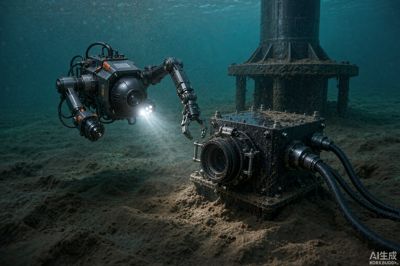
Compact ROV Inspection Moves From Trial to Contract
In mid-November 2026, Aberdeen-based High Performance Robotics (HPR) secured its first commercial contract in Taiwan, providing subsea inspection services to International Ocean Group (IOG, formerly CWind Taiwan) on an offshore wind project. The award followed tank testing at the FloWave facility in Edinburgh and a self-funded offshore trial campaign in Taiwanese waters in March 2026, after which the operator engaged HPR as an additional contractor to accelerate an existing inspection programme. HPR has also deployed micro-ROV technology at the Dogger Bank offshore wind farm in the UK to support cable installation, and IOG itself holds a balance-of-plant O&M contract on the 1 GW Hai Long project.
The commercial detail matters less than the operating model it confirms: small, fast-deploying vehicles carrying out repetitive inspection tasks at a cadence that work-class ROVs were never scheduled for. For connector engineers, that shift quietly rewrites the duty cycle that underwater connectors are expected to survive.
Why Inspection Intensity Changes Connector Duty
A traditional work-class ROV interfaces with subsea hardware a handful of times per campaign. A compact inspection fleet works differently. Each vehicle is recovered and relaunched frequently, its tooling and payload connectors are mated and de-mated between dives, and the same wet-mate interfaces on junction boxes, array cable terminations and sacrificial anodes are revisited on a weekly or monthly cycle across a 25-year asset life.
Where a connector specified for a one-off installation may see 20 to 50 mating events, an inspection-driven duty profile can push toward several hundred. A 500-cycle wet-mate rating that looked generous on a construction project becomes the binding constraint once the same interface is touched every service window. Two failure mechanisms accelerate accordingly: elastomer seal wear at the interface, and contact resistance drift as wiping action redistributes plating and fretting products.
Four Requirements Compact ROVs Impose on Connectors
1. Mate force inside a smaller envelope. Compact vehicles have limited thrust and manipulator torque compared with work-class systems. A connector whose mate force was designed around a 200 hp hydraulic manipulator may simply not latch with a smaller electric arm, particularly when the vehicle is holding station in current. Specify the mate and de-mate force and the allowable misalignment cone, and confirm both against the actual tooling rather than the connector datasheet alone.
2. Cycle life quoted at the real duty, not the datasheet duty. Cycle ratings are usually established dry, at ambient temperature, with clean interfaces. Offshore, mating happens in turbid water with silt in the gap and biofouling on the flange. Ask for cycle-life data with contamination present, and for the contact resistance drift measured after 100, 250 and 500 cycles rather than a single end-of-life figure.
3. Field-serviceable wear parts. If an interface is opened every month, the seal package becomes a consumable. Connectors that allow O-ring and face replacement on deck, without returning the assembly to a workshop, keep inspection fleets on schedule. This is an operational requirement that is rarely written into specifications but always paid for later.
4. Fewer penetrations, not more. Every added connector is another interface to inspect, clean and cycle. Consolidating power, Ethernet-class data and where needed single-mode fiber into one hybrid electro-optical body reduces the number of wet interfaces on a compact vehicle and simplifies tether termination at the same time.
Duty Profiles Compared
| Duty profile | Typical mating events | Connector priority |
|---|---|---|
| Construction / installation tooling | 10–50 per campaign | Mated depth rating, pull strength, one-shot reliability |
| Work-class ROV intervention | 50–200 over asset life | Manipulator compatibility, high power contacts, PBOF options |
| Compact ROV inspection fleet | 200–500+ over asset life | Cycle life under contamination, mate force, field-replaceable seals |
| Resident AUV dock / charging node | 1,000+ over asset life | Alignment tolerance, self-cleaning faces, inductive or low-wear contacts |
What to Write Into 2027 Specifications
- State the expected number of mating events over asset life, and require cycle-life evidence at that number with contamination present.
- Require contact resistance drift data at intermediate cycle counts, not only end-of-test values.
- Specify mate and de-mate force plus allowable angular and radial misalignment, referenced to the vehicle and tooling actually deployed.
- Require field-replaceable seal and face kits, with the procedure documented for deck-level execution.
- Qualify to API 17F and DNV-OS-E206, and confirm the mated and open-face pressure ratings separately.
- Treat hybrid electro-optical capability as a forward requirement even where the current scope is electrical-only; retrofitting fiber after the fact costs more than specifying it now.
Conclusion
The commercial arrival of compact inspection fleets is a signal about where offshore wind O&M is heading: more vehicles, more dives, more repeat visits to the same interfaces. Connectors on those interfaces are no longer installation hardware with a long service life between operations. They are maintenance items, and they should be specified as such — by cycle count, by contamination tolerance, and by how quickly they can be restored on deck.
MarineConn manufactures wet-mate, dry-mate, hybrid electro-optical and deepwater underwater connectors rated to 7,000 m, with low MOQ, custom conductor configurations and worldwide shipping. For specifications and quotations, contact [email protected].